
This Is What Transition Feels Like
Walking forward without forcing clarity
“Fog doesn’t ask for confidence—it asks for presence.”
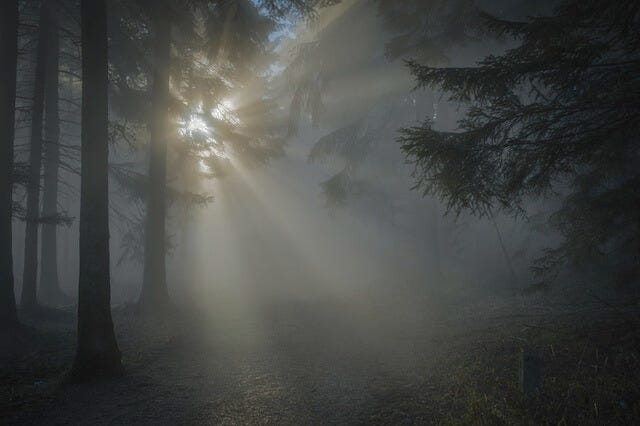
Movement was slow when the fog was this thick.
The locals called it “thick as pea soup”—the kind of fog that delayed schools. Growing up in the valley in Southern California, we were used to it. We eagerly watched the 5 a.m. news to see if we’d be fortunate enough for a fog delay, while our parents complained about how treacherous their commute to work would be.
On days like this, everyone moved differently. Slower. More carefully. With intention.
I was reminded of that childhood place as I navigated this new chapter of my life—a season where I couldn’t see more than a foot in front of me. A season where I had no idea what lay a week, let alone a month, ahead. This was where my plans had fallen apart, leaving trust as the only thing left to guide me.
I trusted that the ground beneath me was firm. I trusted that even if I couldn’t see the path, it existed—and that I would move through it. I also knew that, much like turning your brights on in thick fog, my instinct to overextend only made things worse.
So I followed the light I was given. Step by step. Close enough to see what was next—and no further.
What I didn’t realize then was that fog doesn’t ask for confidence—it asks for presence.
Trust, in this season, hasn’t looked like certainty. It’s looked like staying close enough to notice what’s under my feet. It’s meant releasing the need to know how everything will turn out, and instead paying attention to what’s being asked of me today.
I used to believe trust arrived after clarity—after a plan formed, after options appeared, after I could explain where I was headed. But transition dismantles that order. Here, trust comes first. Understanding follows later, if at all.
There were moments when doing nothing felt irresponsible. When not pushing ahead felt like falling behind. But fog has a way of teaching restraint. It punishes urgency. It rewards patience.
So I stopped reaching for answers that weren’t meant to be visible yet. I stopped trying to light the whole road. Instead, I learned to ask quieter questions: What is mine to carry today? What can I tend without forcing? What step is close enough to take honestly?
Trust, I’m learning, isn’t passive. It’s an active choice to remain where you are long enough to be changed by it.
Transition isn’t a problem to solve. It isn’t a gap to close or a mistake to correct. It’s a place to stand—often longer than we’d like—while something essential rearranges itself beneath the surface.
The fog doesn’t ask me to move faster or see farther. It asks me to stay. To notice. To take the next honest step without demanding the whole map.
And for now, that is enough. To be here. To be present. To keep walking, one visible step at a time.
Written in a season where clarity was limited, but trust was not.


